It's 5:47 PM. You're trying to get dinner on the table, your youngest is tugging at your leg demanding a snack, and your ten-year-old is already lobbying for "just one more episode" of whatever they were watching. You feel the familiar guilt creeping in. You know the screen time guidelines, you've read the articles, you've seen the studies. But you also need to finish chopping these onions without losing a finger.
So you do what millions of parents do: you cave, hand over the tablet, and promise yourself you'll "do better tomorrow."
Here's the thing, though. What if there was a middle path? What if there was a way to give your kids engaging, educational content that doesn't come with the same baggage as screen time, something that actually supports their developing brains rather than hijacking them?
Enter audio content: podcasts, audio stories, and audiobooks designed for children. And before you dismiss this as just another parenting trend, let's look at what the science actually says. It turns out your grandmother might have been onto something when she gathered kids around the radio.
Your Ears Are Not Your Eyes: Why Audio Content Is Fundamentally Different
The Worry: When we hear "media consumption," most of us immediately picture glassy-eyed kids, slack-jawed in front of a glowing screen, thumbs twitching. We've internalized the message that digital content equals passive zombification. So naturally, we lump all media together and feel guilty about any of it.
The Reality: Here's what's fascinating. Current pediatric media guidelines from the American Academy of Pediatrics are built almost entirely around visual screen exposure. The concerns driving those recommendations include sedentary behavior, disrupted sleep from blue light, reduced face-to-face interaction, and displacement of physical activity. Audio content sidesteps most of these concerns entirely.
Think about it: your child can listen to a story while building with LEGO, drawing, or even playing outside. They can absorb a science podcast while you drive to soccer practice. Unlike screens, audio doesn't demand their eyes, their stillness, or their isolation. It asks only for their ears and imagination.
This isn't a loophole. It's a fundamentally different kind of engagement, and the research is starting to show that difference matters.
What's Actually Happening in Your Child's Brain During Story Time
The Worry: Maybe audio is just a less stimulating version of video. Maybe kids zone out, half-listening while the story washes over them without leaving a mark. Is this really any better than background television?
The Reality: Functional MRI studies tell a different story, literally. When preschool children listen to stories, researchers observe activation in left-sided brain regions associated with semantic processing, mental imagery, and narrative comprehension. These are the regions that help children extract meaning from language and build the neural architecture for future reading.
Here's where it gets even more interesting: children who showed greater activation in specific brain regions (the frontal and supramarginal gyrus) during narrative comprehension at ages 5-7 demonstrated better reading and reading comprehension scores at age 11. In other words, the cognitive work your child does while listening to a story today may be laying the groundwork for academic success years from now.
But perhaps the most compelling finding involves social-emotional development. Research has shown that audio media exposure and audiobook usage significantly predicted theory-of-mind performance in preschool children. That's the ability to understand that other people have thoughts, feelings, and perspectives different from their own, and it is foundational to empathy, social navigation, and emotional intelligence.
The Shift: When your child listens to a well-crafted audio story, they're not passively receiving entertainment. They're actively constructing mental images, tracking narrative threads, inferring character motivations, and building the very neural pathways that support literacy and social cognition. Their brain is working, even if their body is relaxed.
The Quality Question: Not All Audio Is Created Equal
The Worry: Okay, but can't kids just listen to garbage content? Won't they gravitate toward the audio equivalent of junk food?
The Reality: This concern is valid and important. Just as "screen time" isn't monolithic (there's a world of difference between an educational documentary and a TikTok spiral), audio content varies wildly in quality and developmental appropriateness.
Research consistently shows that co-engagement matters enormously. When parents discuss content with children, positive cognitive outcomes increase significantly. Interestingly, studies have found that parental storytelling elicits stronger functional connectivity across attention, executive function, language, and sensory networks compared to an unfamiliar voice reading the same material. The home literacy environment, which includes shared listening experiences, correlates with pre-literacy skills and later reading abilities.
This means your involvement transforms audio from passive consumption to active learning. You don't have to listen to every episode of every podcast, but asking "What happened in your story today?" or discussing a surprising fact from a science podcast creates the conditions where audio content delivers its greatest benefits.
The Shift: Choose intentionally. Seek out podcasts and audio stories designed with children's developmental needs in mind: content that sparks curiosity, teaches critical thinking, and invites conversation rather than replacing it.
"But My Kids Won't Just Listen. They Need the Visual Stimulation."
Let's address the elephant in the room. You might be thinking: This sounds great in theory, but my kids are screen-trained. They won't sit still for 'just' audio. They'll complain that it's boring.
Fair point. And I won't pretend the transition is seamless.
But consider this: that very complaint ("it's boring without pictures") reveals something important about what screens have done to our children's imaginative capacity. A generation ago, kids listened to radio dramas and created entire worlds in their heads from audio cues alone. That muscle hasn't disappeared; it's just atrophied from disuse.
The research on background television offers a cautionary parallel: studies show that background TV negatively affects cognitive outcomes, likely because it fragments attention and interferes with deep processing. If we're concerned about audio becoming similarly passive background noise, the solution isn't to avoid audio. It's to create conditions for genuine engagement.
Start with shorter content. Listen together in the car. Make it a bedtime ritual instead of a bedtime screen. The goal isn't to eliminate all visual media overnight; it's to expand your child's media diet to include something that exercises different cognitive muscles.
And here's the tough love: your children will survive boredom. In fact, they need to. The capacity to engage with audio content, to sustain attention without constant visual stimulation, is itself a skill worth developing. You're not depriving them; you're training them.
Your Role: Curator, Not Cop
Here's where I want to leave you: not with fear, but with agency.
You are not powerless against the tide of digital media. You don't have to choose between "no screens ever" and "unlimited access to everything." There's a middle path that acknowledges both the realities of modern parenting and the developmental needs of growing brains.
Audio content isn't a magic solution, but it's a powerful tool in your toolkit. It offers the engagement and educational value of quality media without many of the concerns that drive screen time limits. It can fill the gaps in your day (the commutes, the cooking hours, the restless evenings) without the guilt.
Your job is to be the curator of your child's media environment. Not a cop who polices every minute, but a thoughtful guide who shapes the landscape of what's available and how it's consumed.
Your Toolkit: 5 Steps to Start This Week
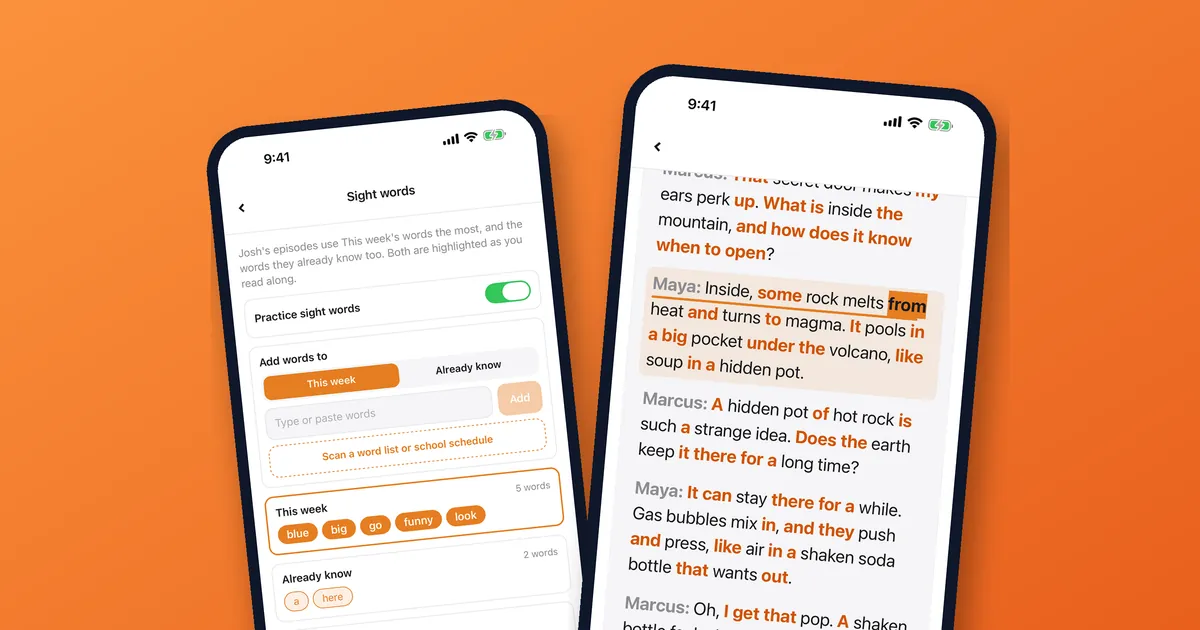
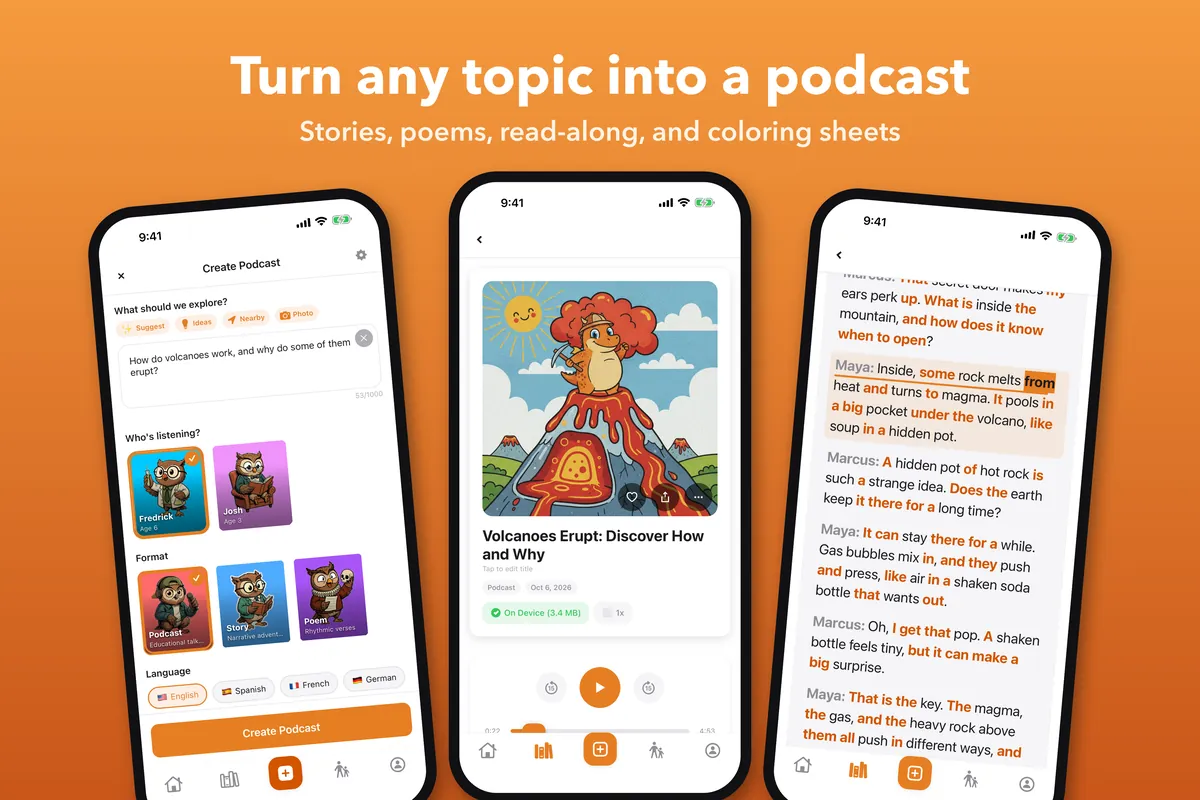
Make an episode about whatever your child is into, with HootPODS. We built the HootPODS iPhone app to solve exactly this problem. Type a question or pick an idea, choose a podcast, story or poem, and about a minute later you have a short audio episode made for your family. Add a child profile with your child's age and interests, or choose a general audience. Whether your child is studying Ancient Egypt for school, obsessed with dinosaurs, or needs a calming bedtime story, you choose the topic, the format and the length, so you decide what they hear.
Transform car time into learning time. Episodes are saved on your iPhone, so they play offline on your next road trip or daily commute, through the car speakers over Bluetooth. Audio keeps kids engaged without screens, which is perfect for those moments when "Are we there yet?" starts earlier than expected.
Replace the bedtime screen with a bedtime listen. Make a calming story or a gentle episode about something your child wondered about today. Playback keeps going with the phone locked, so there's no screen glowing in the room. It's a ritual that feeds curiosity while signaling that the day is ending.
Ask about what they heard. Simple questions ("What was the most surprising thing?" or "What would you have done differently?") transform passive listening into active processing. This is where the real cognitive magic happens. The For the grown-ups card on a HootPODS episode gives you two dinner-table questions to get you started.
Give it time. If your kids resist at first, that's normal. Their attention muscles need rebuilding. Start with shorter content (HootPODS episodes can be as short as 1 minute or as long as 12) and extend gradually. The payoff comes with patience.
Key Takeaways
- Audio content like podcasts and audio stories isn't addressed in current screen time guidelines because it doesn't carry the same developmental risks as visual media.
- Neuroimaging research shows that story listening activates brain regions supporting language development, narrative comprehension, and social-emotional skills like empathy.
- Quality and personalization matter: with the HootPODS iPhone app you choose the topic, format and length of every episode, and you can tailor it to your child's age and interests.
- Audio fits into your life: commutes, quiet time, bedtime routines, and homework support all become opportunities for screen-free learning.
- You don't need to eliminate screens entirely. Adding intentional audio to your family's media diet expands cognitive engagement without the guilt.